Houseplant care: guides and stories
The Queen Anthurium: understand it before caring for it
A long leaf catches every eye. A good home for Anthurium warocqueanum starts with less visible things: its roots, the air and the way you observe it.
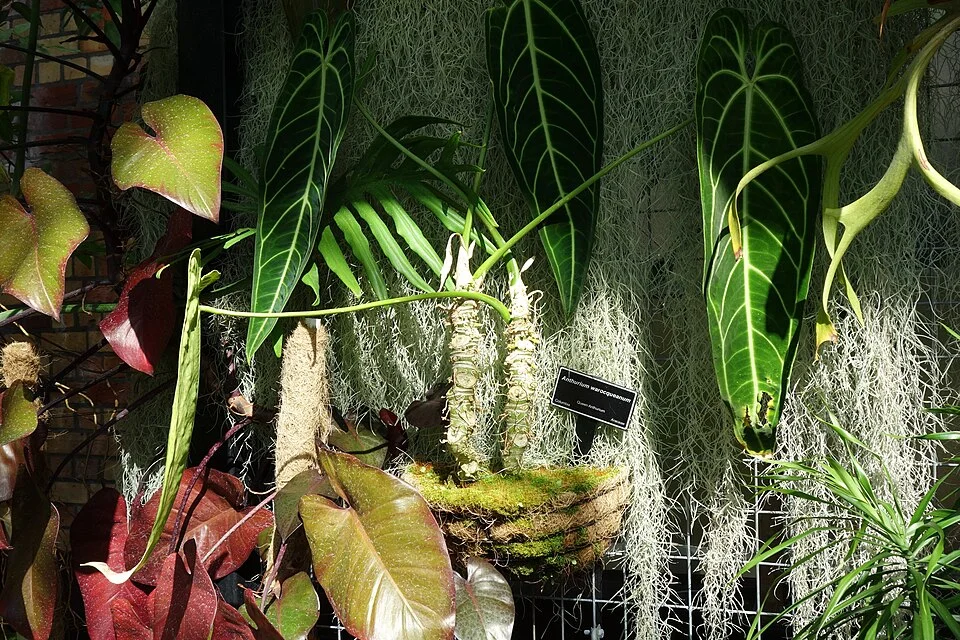
With some plants you notice the whole pot first. With the Queen Anthurium, your eye follows a single leaf downwards. Pale veins cross a dark, velvety surface; the narrow leaf hangs like a banner. It is easy to see why someone would make room for this plant. The attention that room will need is less obvious.
Queen Anthurium is a common trade name for Anthurium warocqueanum, rather than a separate cultivar or a care category. Kew accepts the species and lists Colombia as its native range. It grows as an epiphyte, using another plant as a place to grow. That background is useful, but it does not provide a ready-made recipe for a living-room pot.
Choose the space before buying the plant
Imagine a mature leaf in the proposed spot. Can it hang freely without brushing a shelf, wall or neighbouring plant? Is there good light without harsh sun? Will conditions remain reasonably steady when the heating comes on? The RHS highlights warmth, bright indirect light, high humidity and an open, well-drained medium. An empty corner is not automatically the right corner.
A growing cabinet may help, but it is not an admission ticket to the species. Nor does a cabinet automatically produce good care. Think about the conditions you can actually maintain. High humidity in stagnant air is different from humid air with gentle circulation. Pick a workable location before collecting equipment.
A reservoir tells only part of the story
An empty water indicator is easily mistaken for a thirsty plant. In Pon or another reservoir system, water may still be available higher in the pot even when the reservoir is empty. In a coarse aroid mix, the surface may look dry while the centre remains wet. The indicator and the surface answer different questions.
Our practical approach is to check the reservoir and root zone separately. Record how the pot feels, its weight and what a reading at a consistent position shows. Treat the result as information about this particular pot, rather than a universal number for every Queen Anthurium. A recently transferred plant also starts from a different position from a well-rooted one. Avoid changing the growing system, light and feeding together if you want to understand the response.
A new leaf is not an exam
Damage on an old leaf can keep staring back at you after its cause has disappeared. Take a photograph and follow the change: is new damage appearing, or does the original mark remain unchanged? When something looks wrong, inspect the conditions and the plant before choosing a treatment. Appearance alone cannot reliably tell you whether water, roots, air or pests are responsible.
A useful diary can be brief. A photograph, a short observation and a note of what you changed often say more than a row of automatic ticks. ‘Checked, no action needed’ is useful too. It builds your own reference for this plant.
Who is the Queen suited to?
We place this species in the experienced-grower category. That is our editorial assessment of the combined requirements, not an official certification or a judgement of your abilities. If you are still developing a reliable way to assess moisture and climate, a less demanding first plant may be more enjoyable.
Once you have that routine, the Queen need not become a daily rescue mission. The aim is to notice changes in time, rather than constantly intervene. Its best leaf does not come from a watering calendar. It comes from surroundings you are learning to read.